Thursday, January 12, 2017

Who mourns for a narcissist?

A 1967 Star Trek episode (circa Kirk, not Picard) finds the Enterprise crew confronting a super-being who claims to be the ancient Greek god Apollo. Capt. Kirk quickly determines that Apollo is a narcissist who thrives on worship and adulation. Kirk advises a crew member:

Michael Forest as Apollo, Leslie Parrish as Carolyn.
Star Trek, "Who Mourns for Adonais?" 1967.
"He thrives on love, worship, attention ... We can't give him that worship, none of us can. Especially you ... Spurn him. Reject him."

Maybe that's a way to deal with another narcissist who seems to crave constant attention. The 45th president of the U.S. insists on such glorification, linking his name with any economic uptick, whether or not he's actually deserving of credit.

And, as we've seen, he's just as quick to lash out and childishly ridicule those who point out his inconsistencies.

Worst of all, the news media seems unable to decline covering the smallest of the incoming president's online tantrums. Perhaps they can't, since it's really their job to cover the head of state's every public utterance. For better or worse.

Most of us aren't media professionals. We needn't retweet every pre-dawn boast or criticism coming from Trump Tower. We're not required to provide commentary or links to published news accounts. We needn't post photos of him, whether flattering or otherwise.

So, I've chosen to spurn the 45th president in my digital feed. He won the election, but not the social media platforms I use. I don't need to devote my Facebook timeline to his every utterance; there are many other positive topics to share. And, I'll try very hard not to post links to stories about him; if I have to, I'll try to delete the photos that feed his narcissism.

In short: I will spurn him. And if more of us choose the same course, he will have less to rant against, and less of an audience to captivate.

If we're fortunate, it may marginalize his caustic effect on our civil discourse.


Monday, November 14, 2016

The shell game of politics

We're a society of competitors. We learn what it takes to win. We fight fair, or we take a win-at-all-costs approach.

I'm lately of the view that Donald Trump is in the win-at-all-costs camp. He'd say anything to fire up a segment of disaffected Americans who believed government had passed them by. So we heard threats of deportation, of building a wall that Mexico would pay for, of repeal and replacement of Obamacare -- all without the legal or practical details these promises deserved.

After seeing the Lesley Stahl interview on "60 Minutes," Trump's supporters might be mollified to see him backpedal. He went from a wall to a "wall with fences here and there." He admitted that pieces of the Affordable Care Act would remain. Deportation of millions? Not so fast.

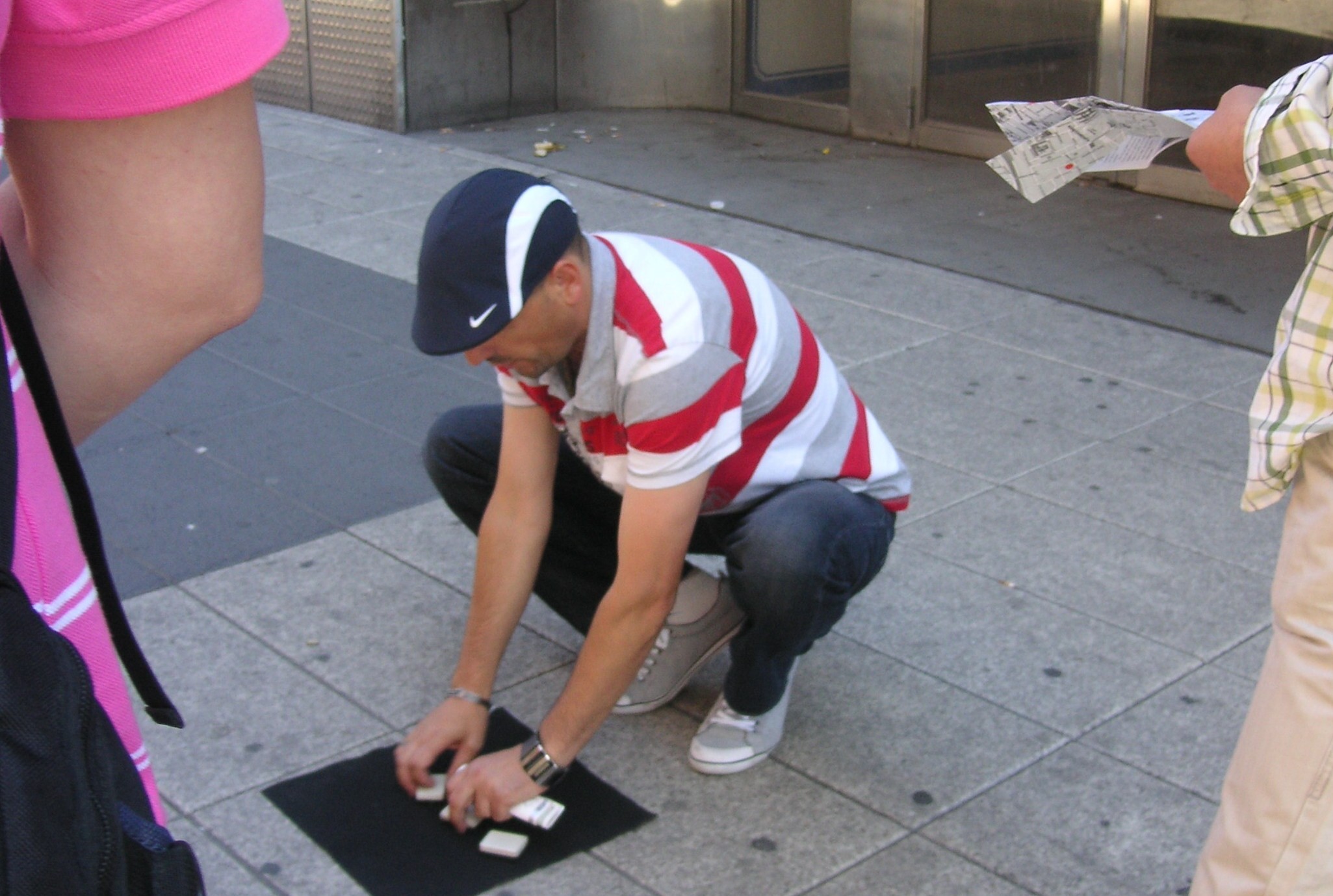
Hutchenspiel (shell game), 2008. By Holger.Ellgaard
 (Own work) [CC BY-SA 3.0 (http://creativecommons.org/
licenses/by-sa/3.0)], via Wikimedia Commons
Was this deceptive? Did Trump's blather and machinery distract everyone from the real strategy -- revving up the forgotten white middle class? Of course. It was a shell game, practiced upon a national canvas. 

All candidates make grandiose promises, and if elected, cannot keep them all. Trump said what he needed to, to blindside media pundits and sway voters who felt neglected by Washington. 

But, what troubles me is not Trump's rhetoric. Rather, three outcomes of Nov. 8 are more disconcerting:
  • Too many individuals took Trump's election as a green-light for open racism. Swastikas on baseball dugouts and in college residence halls signal that hatred need only the slightest open door to spill into our society. Their contemptible actions require more than a "Stop it" from the president-elect. Law enforcement must act swiftly to apprehend, convict, and incarcerate perpetrators of hate crimes.
  • Conservative talking heads talking about a mandate suffer from an anal-cranial inversion. Nearly 50 percent of the U.S. electorate stayed home and didn't vote. Of the 53 percent who voted, 62 million -- a little more than half of U.S. voters -- voted for Secretary Clinton. So, President-elect Trump earned. at best, approval of about 25 percent of the U.S. population. That's not a majority, let alone a mandate.
  • The Democrats need a thorough house-cleaning. I voted for Hillary, believing her to be the most-experienced, best-connected candidate. But I was disheartened at her uninspired choice of a white male Senator (Tim Kaine) as her running mate. What about a person of color (i.e., Sen. Corey Booker, Rep. Joaquin Castro, Rep. Michelle Lujam Grisham)? Packing the closing days of her campaign with diverse celebrities -- Beyonce, Katie Perry, and Jay-Z -- was just dumb. I never voted for a candidate because a celebrity danced on his or her behalf.
I don't know what's next. But I do know we all need to exercise extreme vigilance. Because the "win at all costs" mentality has served neither the major parties or the nation well. As of this writing, it's hard to see how anyone is a winner, except for Trump.


Thursday, November 10, 2016

Can't write our way out

We can’t write our way out of this.

The best screenwriters working today would’ve been shown the door if they’d handed this treatment to a studio executive: “Bombastic, philandering real estate baron insults most of the public, then wins Presidency.”

(c) DKassnoff, 2016
Superb essayists at newspapers large and small ridiculed the gold-plated candidate from mid-Manhattan. John Oliver’s devastating commentaries on HBO dissected Trump’s failings. Journalist David Cay Johnston laid bare the candidate’s financial double-dealings in a best-selling book.

And he won anyway.

So writing isn’t the way to solve the dilemma of having a sexist, xenophobic, ill-tempered barbarian in the Oval Office.

But we can act. We can call out those whose reprehensible behavior and vile epithets toward women, minorities, and different religions are actual hate crimes. And we can demand our local law enforcement agencies prosecute their civic responsibilities. Or face recall at the next election.

Earlier today, in the snark-filled digital minefield of Facebook, a gloating Trump supporter posted this: “Better get you citizen papers in order or bye bye.” (SIC)

Citizenship papers? Isn’t that line straight out of Hitler’s Reichstag?

I have no citizenship papers. I don’t need them. But I’m appalled that, in 2016, with enmity flowing in the city streets, that anyone would raise the dark spectre of contemptible Nazi-speak.

Born in the United States of America, I carry one form of identification: a driver’s license. Occasionally, I include my passport, if I expect to travel internationally.

And, I pack a pocket copy of the U.S. Constitution. I want to be prepared.

My pledge today is unchanged: I will stand with my fellow Americans. I stand for our democracy and freedom. And, I stand against hate, whether blatant or couched in the self-righteous cloak of political innuendo.

I stand in opposition to those who belittle other races and religions for their own aggrandizement.

I will stand against hatred – and, when I see it, I will act.

So say we all.


Monday, June 13, 2016

Kohl's and the Battle for Personal Privacy

The ZIP code for the White House is 20500.

The U.S. Pentagon has six ZIP codes, but the Secretary of Defense's is 20318.

I won't tell you to memorize these ZIP codes. But I'm using them. Every time some sales associate asks for my ZIP code instead of asking "cash or credit," I'm giving her one of these instead.

Retail transactions are no longer a simple, "here, take my money" affair. No, they call for key tags. Reward cards. PIN numbers. Phone numbers. Information the retailer likely already has or does not need.

I'm not paranoid. But I believe each time I give a store clerk my ZIP code, or my phone number, or some seemingly innocuous piece of data, I'm inviting them to look into my personal life.

THEY DON'T HAVE THAT RIGHT. They're merchants. They're not providing national security. They're selling me a shirt. End of relationship.

Flamingos at Sarasota Jungle Gardens, 34234.
 (C) DKassnoff, 2013
My private war with retailers is the ZIP code battlefield. They don't need it, and you don't need to give it to them. So make one up. Take a few seconds to find a ZIP code for the Burger King in Spokane, WA. Or Sarasota Jungle Gardens (34234). Get creative. If you don't find one, I've provided two above.

No merchant does a poorer job of this than Kohl's, the clothing and cosmetics chain. Don't have your Kohl's Reward card? No problem. Just enter your Social Security Number.

My what?

Hey, Kohl's: SSIs are the Number One method used to execute Identity Theft. That's why government agencies urge consumers not to give them out.

Apparently, Kohl's couldn't find my SSI number. The poor cashier next asked for my driver's license. Then he wanted my phone number.

That's when I walked out.

Note to Kohl's: it's time to climb out of the cave where your rewards program was conceived. I'm no longer sharing ZIP codes, driver's licenses, or SSI numbers in exchange for a fat $2 off a $28 purchase. Your database doesn't need to know I bought a dress shirt.

Other retailers engage in ZIP Code harvesting, including Five Below. As if they're going to alter the inventory of their Made in China mother lode based upon my buying pattern. I bought a $5 charging cable. Quick, fire up the Big Data Machine!

You want to identify me when I don't have my reward card? TAKE A DIGITAL PICTURE OF 
ME, add it to my file. No numbers. No codes. I'm a bald man with glasses and a goatee. No one's going to confuse me with Brad Pitt. It's hard to go wrong here. My bank did this some time ago, and even if I get a haircut or wear a hat, the teller knows it's me.


Wednesday, August 5, 2015

Disengagement blues

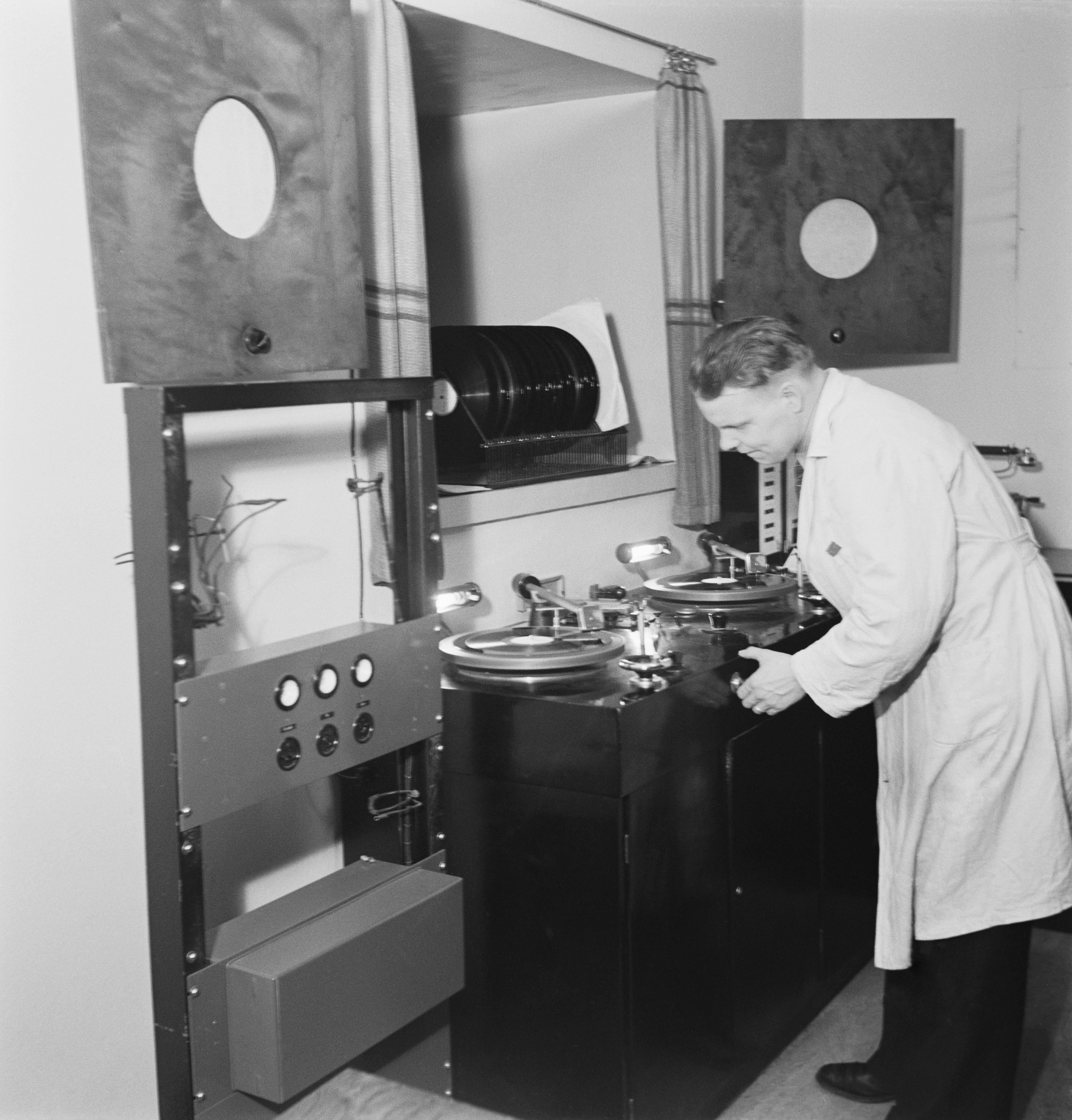
By Archives of the Finnish Broadcasting
Company Yle [No restrictions], via Wikimedia Commons
This week, I launched a substantial intranet site for an organization of more than 900 employees. They learned about it via an "all hands" email message.

The site has stories about employees, photos, interactive tools, downloadables, and a live webcam feed. It replaces a very dull, one-page intranet site that consisted of a bunch of links to other internal sites.

And I received two responses.

That's it. Two out of 900.

I feel a little like the nighttime disc jockey who programmed a terrific three-hour air shift -- only to learn that a lightning strike at the transmitter site had knocked the station off-the-air 20 minutes into the first hour.

I didn't think for a moment that a new intranet site was going to immediately engage a diaspora of employees who are spread across multiple locations. It doesn't work that way.

But, two out of 900?

This may not be fixable. Not without cat videos, anyway.


Wednesday, July 1, 2015

Busted but unbroken

Now is the summer of my digital discontent. Several of my digital cameras manufactured around 2007-2008 are failing. None was severely abused, but these little cameras spend their lives bouncing around in briefcases, backpacks, and shoulder bags. Bad stuff happens.

(c) DKassnoff, 2015.
These compact cameras -- two Canon Powershots and a Kodak EasyShare -- don't owe me much. I bought them off eBay, where 7- and 10-megapixel cameras superseded by newer models go to find their next lives.

(Sellers on eBay had trouble spelling Canon. I hunted those misspelled auction titles and bought these cameras for little cash.) I'd clean them up and re-sell them. I kept the ones that worked well.

(Some people believe that a 20-megapixel camera must take better photos than a 10-megapixel camera. I'm not one of them.)

When new, each of these sold for $200-$300. Today, you can pick up used Canons for much less than $50. Canons, especially, take excellent stills, while the Kodak had great HD video and dual built-in microphones that were hard to beat.

In the film days, I'd developed a skill for fixing 1970s-era rangefinder cameras, which -- despite having non-zoom lenses and no built-in flash -- produced marvelous photos. Recent digital cameras don't have film transports or rewind knobs; they have sensors, ribbon cables, and circuit boards. And they are tiny.

But, faced with three dying digital cameras, I decided to haul out my precision screwdrivers and tweezers, and see if I couldn't repair the pocket cameras. (Tip: use a large flat magnet to capture all the tiny screws that like to bounce merrily under your workbench.)

How did I do? Not bad. Youtube has dozens of homemade how-to videos of people repairing their digital cameras. In less than 30 minutes, I had a good idea of what I needed.

The Kodak had a failed image sensor. A quick peruse of the Internet reveals that sensor failure in the V1253 camera is fairly common. (Canon built their cameras in Japan; Kodak went to China. Big difference.) Online companies can sell you a replacement sensor, but unless you're truly in love with this camera, don't bother. It's not well made, and removing covers, buttons, lens assembly, etc. really makes it a chore. Since nearly any smartphone can capture good HD video, reviving an eight-year-old Kodak for this function seems a waste of time.

Canons, on the other hand, are better built from the start (the Japan thing). When one component goes south, many owners put their inoperative cameras up for auction. So buy a parts-donor camera for less than $20. That's where I found replacement switches, body parts, and screws to revive the Canon SD750 and SD790IS pictured above.

And they both work fine.

Tuesday, June 2, 2015

Recruiting from hell

The woman on the other end of the call was hard to understand. Poor enunciation, difficult accent, noisy background.
Fishers of Souls, Adriaen van de Venne (circa 1589–1662)
[Public domain], via Wikimedia Commons
She was recruiting based on a resume I'd posted many months ago, for a "major employer in my town."

As best as I could tell, it was a marketing communications specialist position, 12 month temporary, with no benefits. 

The pay? An hourly rate half of what a full-timer with 3-5 years experience earns. And I'd need to pay my own social security and employment taxes. 

I said no.

Sure, the temp job might lead to a full-time appointment. But I wasn't interested in a "major employer" so stingy that it couldn't pay me in health insurance what it was paying the indecipherable recruiter to find candidates.

In my town, the well-known major employers are only a shadow of their former selves. They no longer rake in fat profits, yet they continue paying their CEOs absurdly high salaries. 

But their third-world approach to sourcing experienced talent is beyond insulting. Outsourcing your recruitment basically tells candidates: "We have no interest in building relationships."

Problem is: that's what marketing is all about, relationships. Especially when you're selling $500,000 boxes full of mysterious digital gadgetry. 

Relationships are essential. Taking the arm's-length approach to building a marketing team isn't the way to get it done.